Danger of Boardwalks and Rock Art
Over the past two decades, exacerbated by global warming, there has been a series of disasters at rock art sites where visitor boardwalks made of wood and recycled plastic have burnt. Multiple countries have been impacted. The damage caused has been terrible and irreversible. We urge extreme caution when considering installing a boardwalk. All the burnt boardwalks were fire treated and said to be “fireproof” up until the time that they burnt.
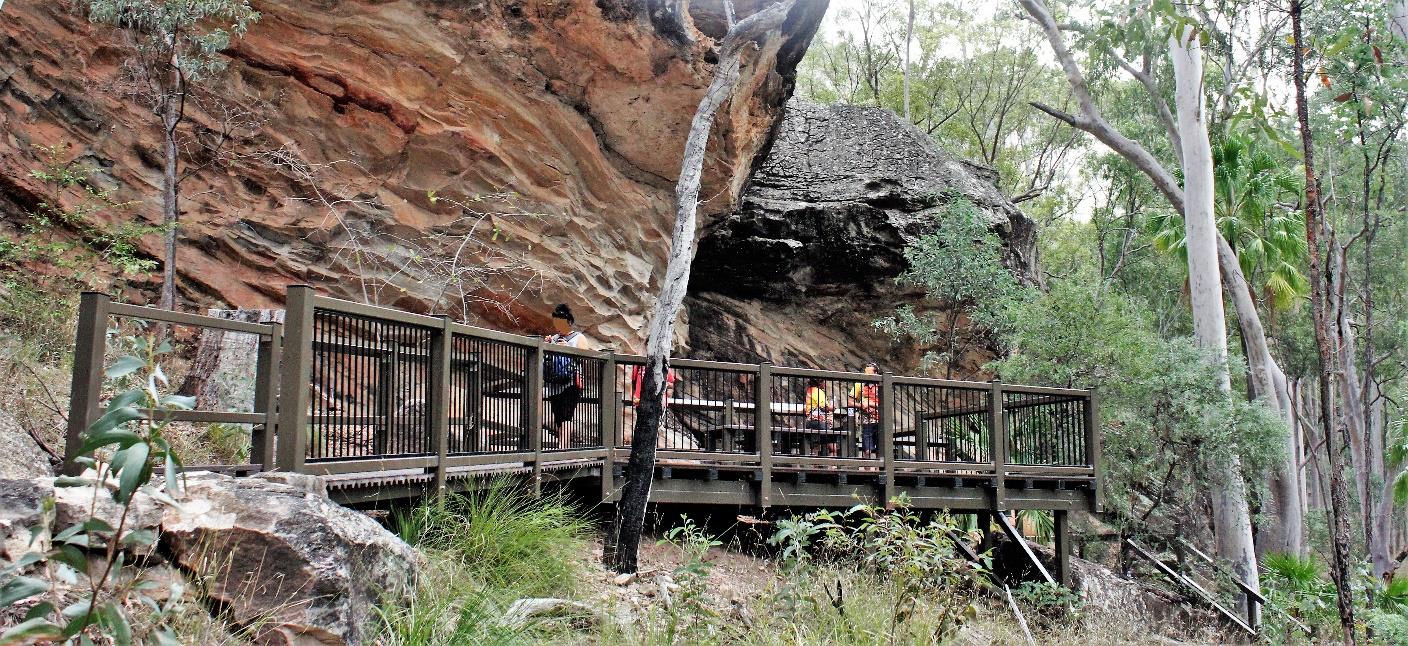
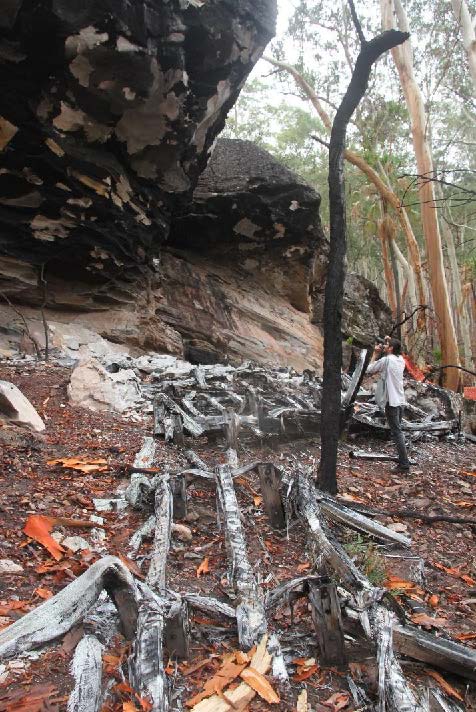
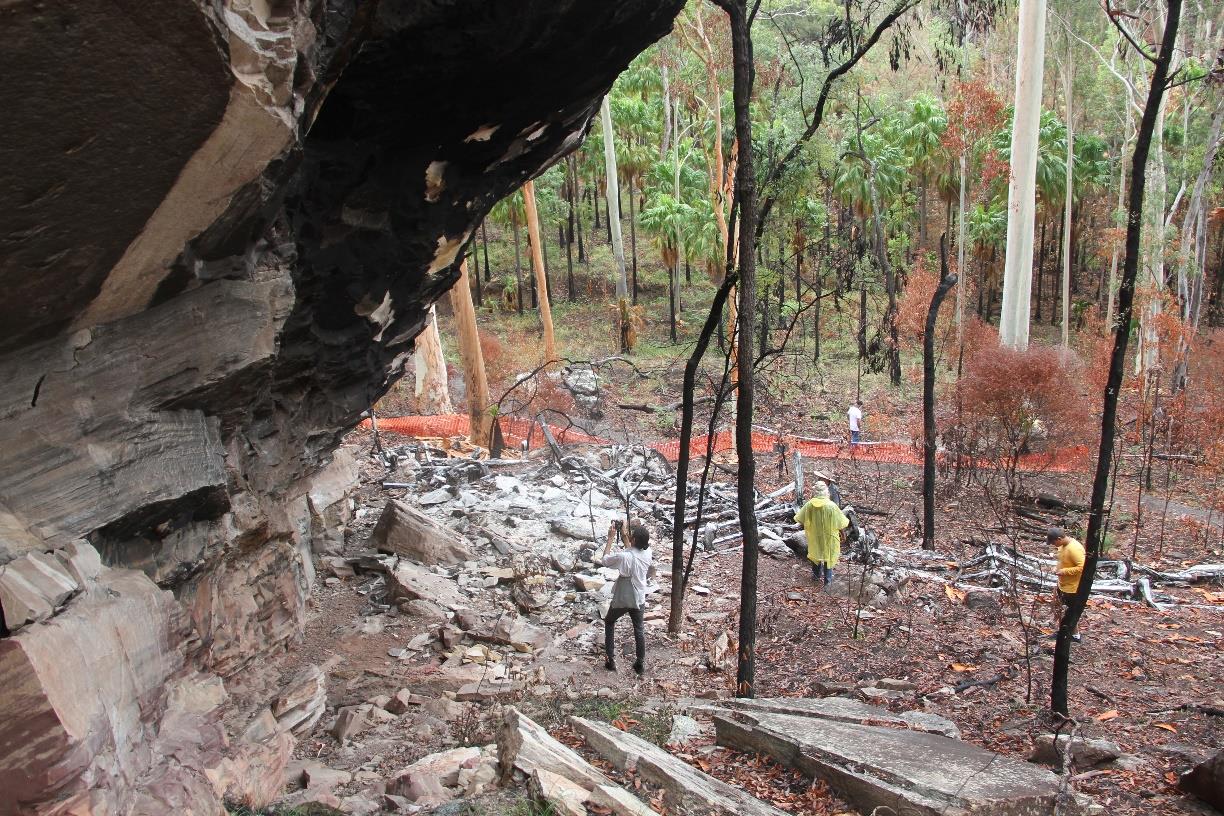
Baloon Cave, Queensland Australia
A boardwalk made using a recycled plastic, sold under the name EnduroplankTM, burnt in December 2018 during an out-of-control bushfire. The boardwalk burned with such intensity that it caused massive exfoliation of the rock art surface, destroying and damaging much art. Full report below.
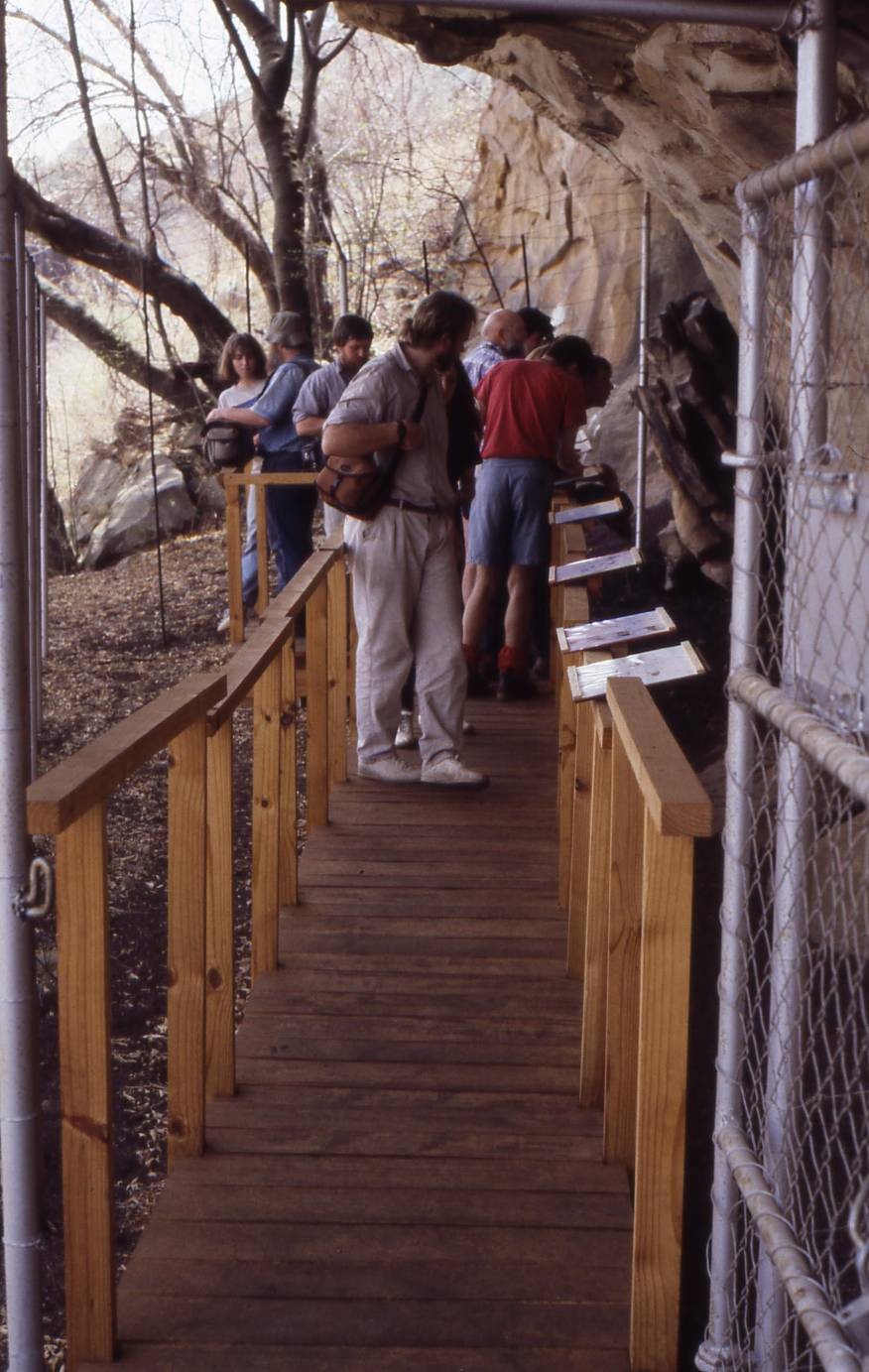
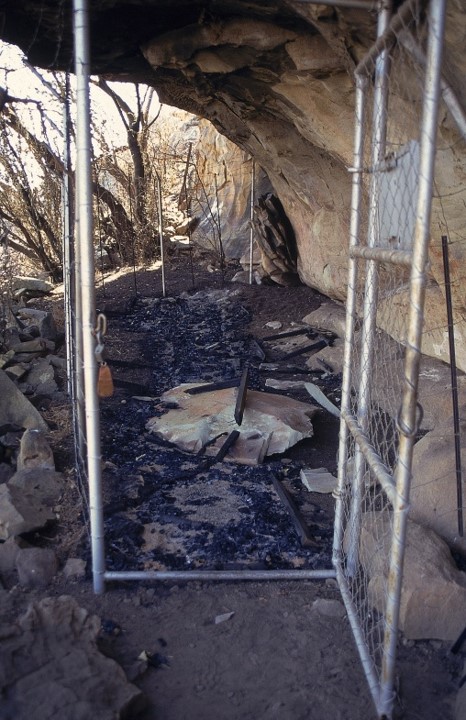
Tandjiesberg, Free State, South Africa
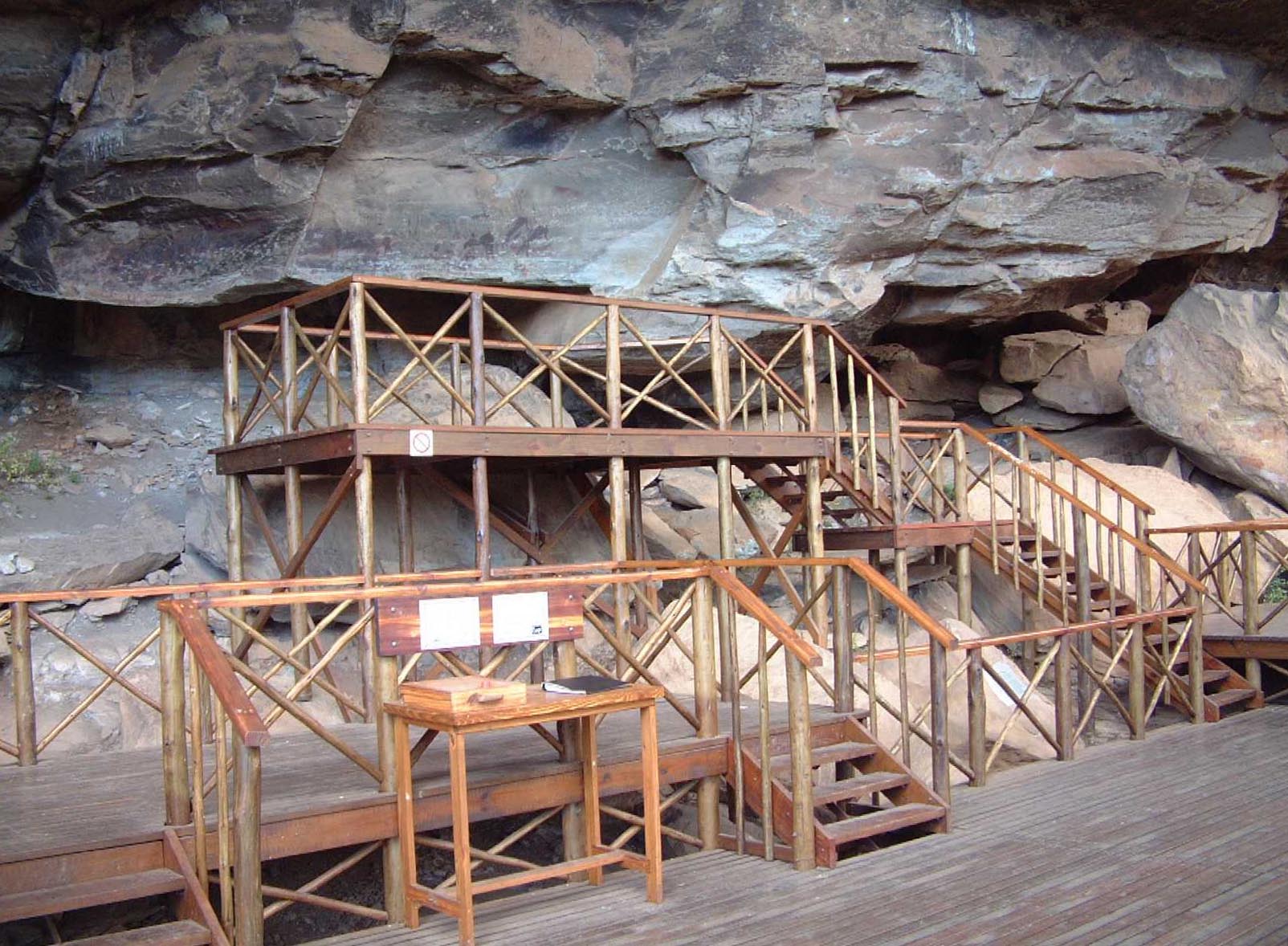
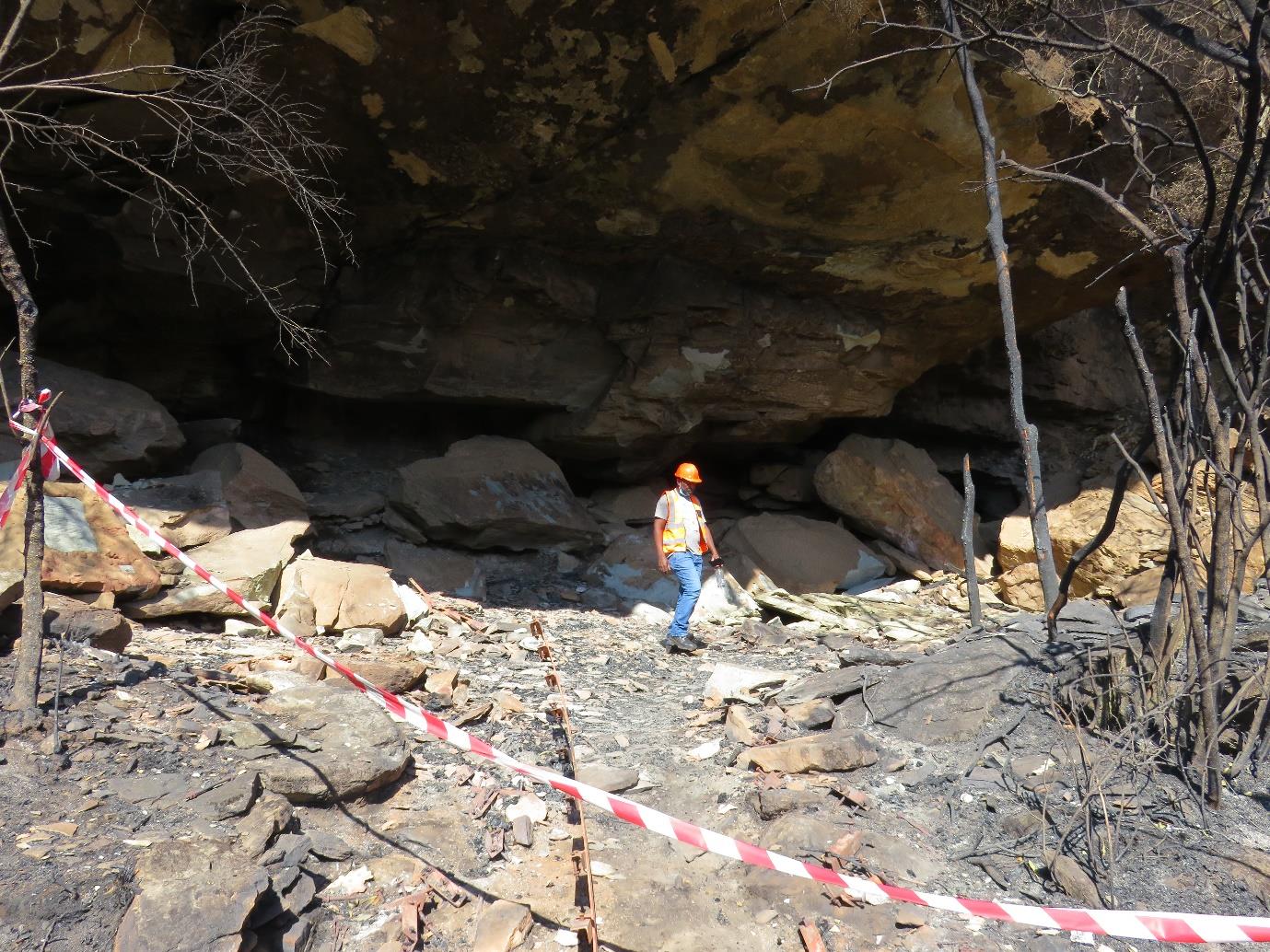
In December 1998 a wild fire burnt the wooden boardwalk at one of South Africa’s rock art national monuments: Tandjiesberg. The boardwalk had been treated with fire retardant. Significant damage and rock spalling was caused by the fire. Report below.
Main caves, KwaZulu-Natal, South Africa
At the heart of the UNESCO World Heritage Site – the Maloti-Drakensberg Park – a wild fire burnt the wooden boardwalk at Main Caves rock art site in August 2024. The large wooden structure burned with such intensity that significant damage was caused to globally significant rock paintings on the shelter walls.
Words of Warning
 ICOMOS International Scientific Committee on Rock Art